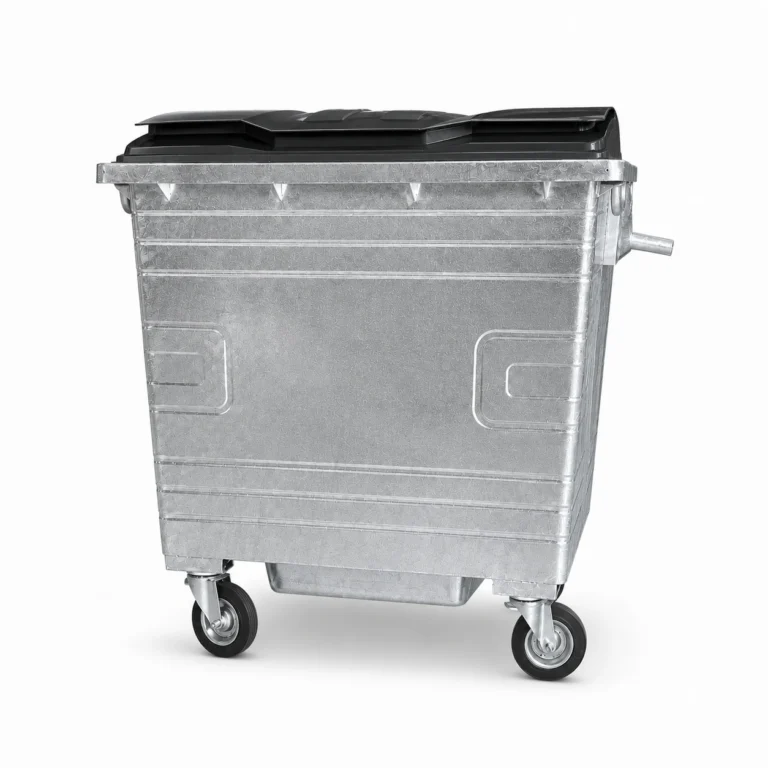

EN 840 Waste Container Standard: A Practical Buyer’s Guide
The EN 840 series is frequently referenced in European municipal and commercial waste container projects.
However, EN 840 is not a single specification covering every waste bin. It is a multi-part series addressing different mobile container structures and requirements.
BS EN 840-1:2020 specifies dimensions and design requirements for defined two-wheel mobile waste and recycling containers with capacities up to 400 litres for comb lifting devices.
Products in this category may include 120L, 240L and 360L mobile bins, depending on their design and interface.
BS EN 840-2:2020 addresses defined four-wheel containers with flat lids, capacities up to 1300 litres and trunnion and/or comb lifting devices.
BS EN 840-3:2020 covers defined four-wheel containers with dome lids, capacities up to 1300 litres and specified lifting devices.
BS EN 840-4:2020 applies to defined four-wheel containers with flat lids and capacities up to 1700 litres for specified wide lifting devices.
BS EN 840-5:2020 provides performance requirements and test methods for mobile waste and recycling containers within the relevant series.
BS EN 840-6:2020 addresses safety and health requirements for mobile waste and recycling containers.
Do not request only:
EN 840 containerInstead, specify:
Not every large industrial container falls within the mobile container configurations covered by the cited EN 840 parts.
Larger containers should be assessed according to their design, lifting equipment, applicable tender specification and destination-market requirements.
Before publishing an EN 840 claim, verify the supporting documents.
Potential documents include:
Third-party assessment documentsnetus et. Imperdiet dui accumsan sit amet.
Product drawings
Test reports
Inspection reports
Manufacturer declarations