

Underground and semi-underground waste containers explained: capacity, space savings, installation, lifting systems and when they beat surface bins.
Underground and semi-underground waste containers hide bulk storage capacity beneath the street surface, exchanging a small, tidy inlet for a buried volume that can hold days of waste from surrounding buildings. Once an experiment in northern Europe, they are now specified worldwide in city centres, new districts, resorts and campuses. This guide explains how they work, what they deliver, and how to decide whether they belong in your project.
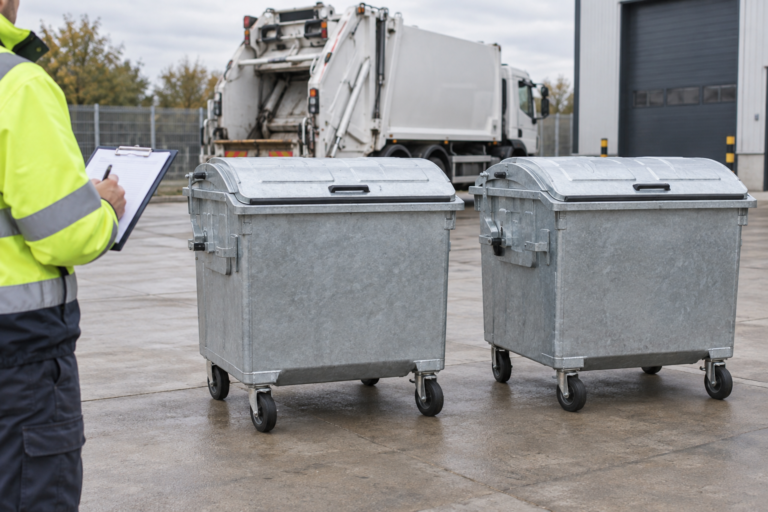
A conventional 1100L container stores roughly a cubic metre above ground and needs a collection truck’s lifting arms. An underground container stores typically 3–5 m³ in a buried liner or membrane, presenting only a compact inlets unit on the surface. Collection lifts the whole liner with a dedicated vehicle or a hydraulic hoist, empties it into the truck, and lowers it back. Fewer, larger pickups replace frequent, small ones, and the street keeps its sightlines.
| Type | Storage above ground | Typical capacity | Best in |
|---|---|---|---|
| Semi-underground | One visible inlet column (1–1.5 m) | 3–5 m³ | Dense urban blocks, plazas, offices |
| Full underground | Flush or near-flush inlet | 3–5 m³ and up | Heritage areas, pedestrian streets |
| Surface four-wheel (reference) | ≈1 m³ per 1100L unit | 0.66–1.1 m³ | Standard back-of-house collection |
Underground systems are civil projects as much as waste equipment:
Budget for the civil works, permissions and a maintenance plan for the hoist mechanism; these are the costs that surprise inexperienced buyers, not the container itself.
Collection uses one of two systems: a side-lifting truck with a hydraulic crane that grasps and empties the liner, or a fixed or mobile hoist that raises the liner to a roll-off body. Inlets are designed for specific waste types – general, recycling, glass or food – and openings are lockable where access must be controlled. Ensure the system you buy matches lift capacity and vehicle fleet you will actually deploy; compatibility mistakes are costly to reverse.
Underground systems need a lifting vehicle, civil consent and long-term maintenance; they rarely pay back for scattered single buildings or low-volume sites where a standard collection contract already runs. For most back-of-house operations, high-quality surface containers remain the right tool, and underground sites handle the public-facing, space-constrained exceptions.
Underground containers trade upfront civil cost for lasting capacity, discretion and collection efficiency in dense and sensitive locations. Match the system to the site’s services, water table, lifting fleet and maintenance capability; in the right place they turn a daily nuisance into invisible infrastructure. Everywhere else, a well-maintained surface fleet of 1100L galvanized containers is still the workhorse.
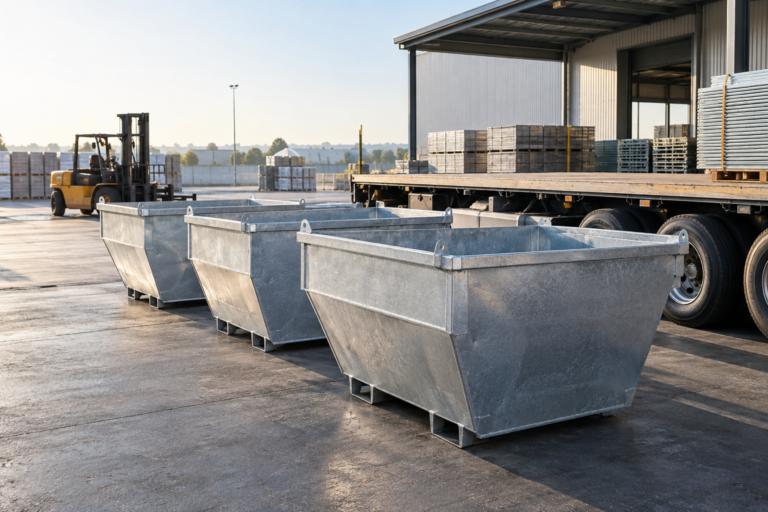
For surface and back-of-house projects, KOVANTO provides the 1100L galvanized containers and 2.5m³ units used next to underground programmes. Contact info@kovantowaste.com for fleet advice.




[…] Underground Waste Containers Guide […]