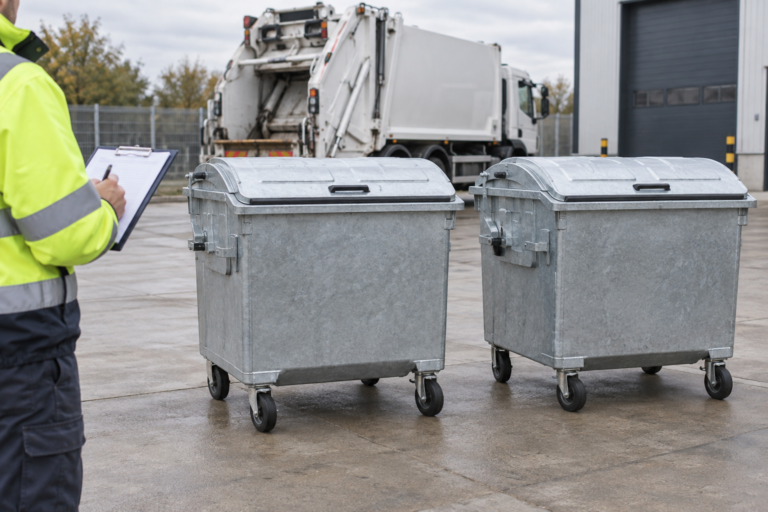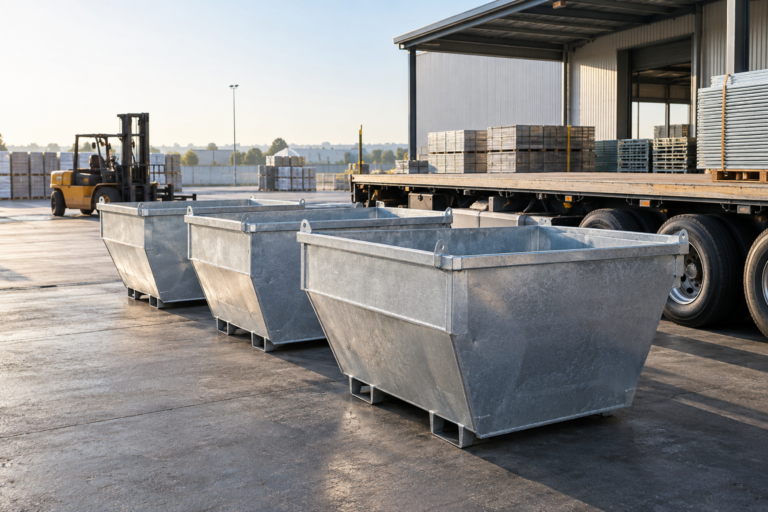
Waste container acceptance testing is the final control point between a purchase order and a dependable operating asset. It should not be treated as a quick visual handover. Procurement teams, site managers and distributors need a consistent way to confirm that each delivered container matches the agreed specification, can be handled safely and has the records needed for future service.
A good commissioning check protects both parties. It creates a clear record of the condition at delivery, identifies any practical issue before the container enters service and gives the site team confidence in daily use.
Start with the approved order, drawing or quotation and any agreed options. The person receiving the delivery should know the required capacity, body style, lid arrangement, wheels, lifting interfaces, finish and quantity. Keep these documents together with the delivery note and a simple inspection form.
For multi-site projects, give every location the same checklist. A shared format makes it easier to compare deliveries, raise claims promptly and hand records to the maintenance team. If containers are allocated to a specific waste stream, record that allocation at the same time rather than relying on informal site knowledge.
Count the units before unloading is completed where practical. Compare the delivered quantity and visible configuration with the order. Confirm that the container dimensions and access arrangement suit the planned collection point, especially where there are gates, enclosures, ramps or tight vehicle approaches.
These checks are also a useful opportunity to review the chosen waste container product with the site operator. A correct product can still be difficult to use if collection access or internal movement has changed since the project was specified.
Walk around each container in good light. Look for transport damage, sharp edges, loose fittings, distorted panels, incomplete fasteners or signs that a lid does not close correctly. Roll wheeled containers over a short, clear surface to check that castors turn freely and brakes engage where fitted. Open and close lids several times; the movement should be predictable and should not create a pinch point for normal users.
Photograph any issue before the unit is put into service. Record the container number, location, date and a short description. This makes a delivery-damage discussion much easier than trying to reconstruct what happened after the site has begun using the equipment.
Acceptance is not complete until the container works in its intended position. Place it at the collection point and check pedestrian clearance, staff access, vehicle approach and the route used for cleaning or maintenance. For a new site, a short commissioning meeting with the cleaning contractor, facilities team and collection provider can prevent later confusion.
Use this time to agree who checks contamination, who reports damage and how full containers are escalated. The right container options can support that workflow, but roles and routines are what keep a waste point reliable over time.
Acceptance results should feed directly into the operating plan. If a site has narrow access, a difficult turning point or a specific cleaning requirement, record it with the asset information rather than leaving it in an email chain. When the same container model is deployed elsewhere, these observations help project teams select appropriate routes, options and service routines. A short post-delivery review also confirms that users understand the loading limit, lid operation and reporting route for each unit. This makes the handover a useful control for the entire service life, rather than a one-time delivery signature.
Sign off only after open items have an owner and a realistic next step. Keep the acceptance form, photographs, delivery documents and any operating instructions in the asset record. This baseline is valuable when planning repairs, reviewing supplier performance or relocating containers later in the project lifecycle.
If your team is preparing a new collection point or a multi-site rollout, review KOVANTO waste solutions and contact KOVANTO for practical container selection and project support.