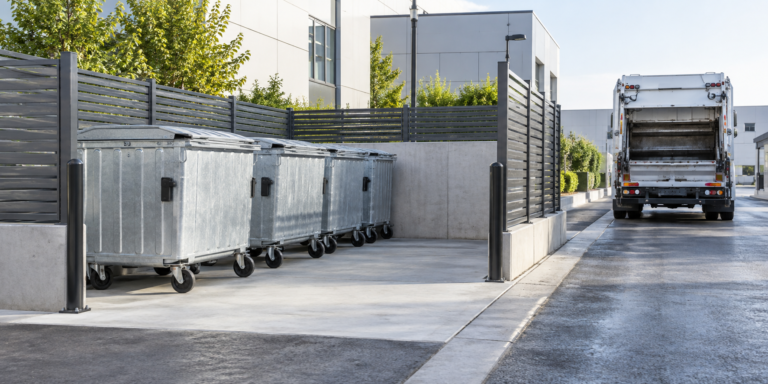

Museums balance conservation-grade environments with thousands of daily visitors, often inside listed buildings where every container must be discreet. Waste...
Museums balance conservation-grade environments with thousands of daily visitors, often inside listed buildings where every container must be discreet. Waste systems here are engineered to be invisible: compact bins in galleries, careful routing and absolute control back-of-house.
Before choosing containers, map the streams that museums and art galleries actually generate. Each stream has its own container rule: frequency of removal, sealing needs and recycling value.
The zones below cover the standard layout for museums and art galleries; adjust the mix to your floor plan, footfall and collection contract.
| Zone | Container type | Key requirement |
|---|---|---|
| Galleries and exhibition floors | compact wall or floor bins, discreet finish | quiet, minimal visual impact |
| Lobbies and cloakrooms | larger bins with recycling clusters | first and last impression |
| Cafe and restaurant | 60–120L pedal bins, food waste stream | sealed, daily change |
| Back-of-house and stores | 240L wheels, controlled access | security trumps convenience |
Gallery floors demand powder-coated or stainless finishes chosen to blend with architecture. Back-of-house uses standard HDPE wheels and 1100L containers behind locked doors.
Visitor numbers govern the public fleet: a museum with 500,000 visitors a year clears roughly 0.05–0.1L per visitor from public streams alone. The cafe is the biggest single generator after the shop, so size the food stream against catering revenue, not footfall.
Display areas need nightly, quiet cleaning: wheeled, low-noise bins that cleaners move one-handed. Keep conservation and workshop packaging on a separate, documented route so nothing contaminates storage areas.
Two practical questions decide most container orders for museums and art galleries: what is already specified in the collection contract, and how the indoor or outdoor layout moves those bins to the loading point. The typical streams are visitor litter in galleries and cafes; paper, tickets and printed guides; cafe and restaurant food waste; packaging from conservation and workshop stores. Each one needs its own container, clear signage and a dedicated collection slot, because mixing streams at the point of use lowers the recycling value of the whole load.
When those streams arrive at different times of day, the layout has to absorb peaks without blocking access routes. The Galleries and exhibition floors zone works best with compact wall or floor bins, discreet finish, where quiet, minimal visual impact. The Lobbies and cloakrooms zone works best with larger bins with recycling clusters, where first and last impression. The Cafe and restaurant zone works best with 60–120L pedal bins, food waste stream, where sealed, daily change. The Back-of-house and stores zone works best with 240L wheels, controlled access, where security trumps convenience.
For museums and art galleries, the usual hidden cost is not the container itself but the mismatch between capacity and pick-up frequency: Visitor numbers govern the public fleet: a museum with 500,000 visitors a year clears roughly 0.05–0.1L per visitor from public streams alone. The cafe is the biggest single generator after the shop, so size the food stream against catering revenue, not footfall. Keep the material decision simple as well.
Our most common finding on site visits is under-specified areas where lighter plastic units take knocks they were never designed for, followed by missing lids on bins that store material overnight. Gallery floors demand powder-coated or stainless finishes chosen to blend with architecture. Back-of-house uses standard HDPE wheels and 1100L containers behind locked doors. If you are talking to more than one supplier, compare the galvanized coating weight and lid mechanism head to head rather than price per unit alone.
Visual discretion rules in heritage and gallery spaces; compact bins emptied frequently beat large bins on display.
Yes; guide and paper recycling runs alongside cafe streams, with back-of-house segregation for packaging.
Powder-coated or stainless finishes that match the architecture and resist cleaning chemicals used in galleries.
KOVANTO manufactures 50l 360l Metal Wheelie Bins, 120l Plastic Wheelie Bin Waste Container, 240l Hdpe Plastic Wheelie Bin, with OEM/ODM options in capacities from 50L walk-in bins to 2.5m³ containers. Send your site plan and collection contract to info@kovantowaste.com for a container layout proposal sized to your streams.