

Public outdoor bins must survive weather, vandalism, fire risk and heavy use. Here is what to look for when choosing metal waste bins for streets, parks, plazas and commercial outdoor areas.
A public bin is expected to work in rain, sun and frost, absorb abuse, keep smells in, and still look acceptable ten years after installation. Plastic bins struggle with several of these demands; metal, and especially hot-dip galvanized steel, was built for them. This guide explains the performance requirements for outdoor metal waste bins and how to match a container to streets, parks, plazas and commercial sites.
These conditions explain why municipalities and estate managers repeatedly return to galvanized steel: a zinc coating provides decades of corrosion protection, the container is non-combustible, and serious impact deforms rather than shatters the body.
| Type | Typical capacity | Best suited to |
|---|---|---|
| Swing-top metal litter tins | 60–100L | Streets, bus stops, markets, high-footfall plazas |
| Stainless steel bins | 144L class | Coastal areas, food courts, premium commercial districts |
| Galvanized two-wheel bins | 50–360L | Parks, campsites, sports facilities, service areas |
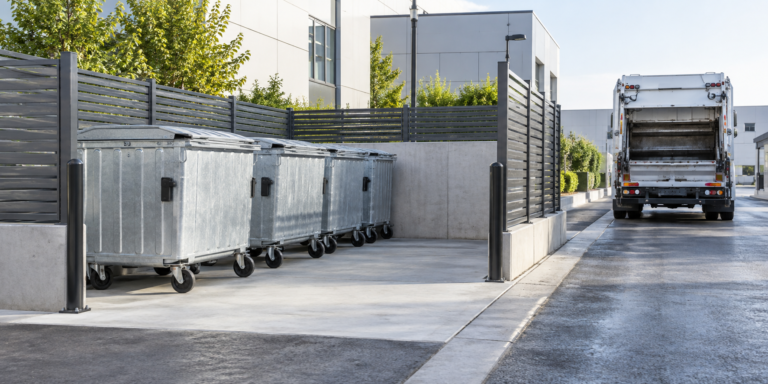
| Four-wheel metal containers | 660–1100L | Back-of-house of parks, malls, stations and events |
For visible public spaces, freestanding metal bins give a neat, permanent look. For service yards and collection points, wheeled metal containers are emptied by truck and are more efficient than many small tins.
A freestanding bin can be moved, stolen or used to damage property. Public bins are typically bolted to concrete bases or paved surfaces, fixed to posts, or ballasted with heavy bodies. Wheeled containers parked outdoors should use braked casters and, where needed, wheel locks or chains. Galvanized steel bodies also resist the cutting and prying that thinner plastic structures invite.
Not all ‘metal bins’ are equal. Bare steel rusts within months outdoors; painted steel chips where hit and corrodes at the chip. The specification that matters is hot-dip galvanizing per ISO 1461, which bonds a zinc layer to the steel so that even scratched areas keep a protective coating. For coastal zones or chemically aggressive sites, stainless steel grades such as 201 or 304 remove rust risk entirely at a higher price point.
Fire is the most serious hidden risk in public bins. A discarded cigarette in paper can smoulder silently and ignite the whole container. Metal bodies contain the fire and protect adjacent property; plastic bodies melt and can feed a blaze. For graffiti, metal surfaces are easier to clean and repaint than polymer panels, and a textured galvanized finish makes marking less visible.
Outdoor bins live in the toughest environment of any waste container. Galvanized steel delivers the corrosion protection, fire safety, strength and longevity that streets and parks demand, while stainless steel covers the most aggressive coastal locations. Combine the right material with the correct intake, anchoring and capacity, and one installation can serve the public for a decade or more.
Explore the 50L–360L galvanized metal bins and the 1100L galvanized waste container from KOVANTO, or ask the team at info@kovantowaste.com to help you specify a public-space solution.




[…] Outdoor Metal Waste Bins For Public Spaces […]