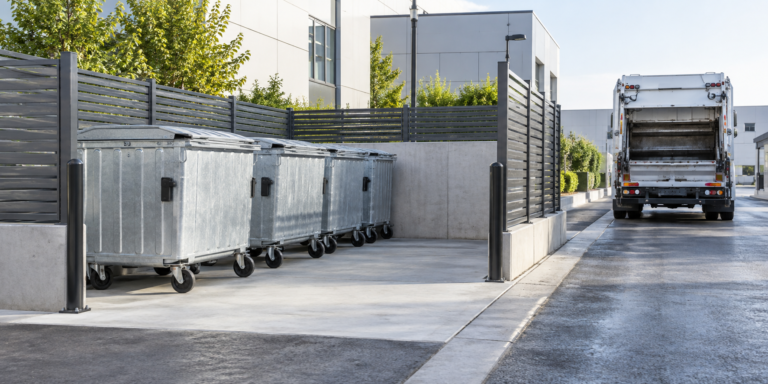

Wheelie bin dimensions explained: typical heights and footprints for 120L to 1100L two-wheel and four-wheel bins, plus measurement tips for waste rooms.
A wheelie bin is specified in litres, but installed in millimetres. The difference matters: a 240L bin that will not fit through the waste-room door, or an 1100L container whose rim sits 4 cm below your truck’s lifting bar, is a failed purchase no matter how well it was priced. This guide explains the typical dimensions of common bins, where they come from, and how to measure your site before you order.
Most European-market bins are built to the EN 840 series of standards, which define dimensions and design for wheeled waste containers so that bins from any manufacturer interface correctly with collection vehicles. Compliance with EN 840 is the practical requirement for tender submissions and municipal fleets; always confirm the standard version and the drawing, not just the litres.
| Nominal size | Typical height | Typical footprint (W x D) | Notes |
|---|---|---|---|
| 120 لترًا | ≈ 930 mm | ≈ 480 x 555 mm | Standard household size |
| 140L | ≈ 1070 mm | ≈ 480 x 555 mm | Tall variant, same plan |
| 240 لترًا | ≈ 1070 mm | ≈ 580 x 740 mm | Most common commercial size |
| 360 لتر | ≈ 1100 mm | ≈ 605 x 770 mm | Larger body, robust wheels |
Values are typical for EN 840-compatible bins and vary by manufacturer and mould design – treat them as planning figures and verify against the supplier’s dimension drawing before locking your waste-room layout.
| Nominal size | Typical height | Typical footprint (W x D) | Notes |
|---|---|---|---|
| 660 لتر | ≈ 1180–1250 mm | ≈ 1265 x 965 mm | Mid-size, yard or dock |
| 1100 لتر | ≈ 1370–1400 mm | ≈ 1265 x 965 mm | The industry standard four-wheel unit |
Four-wheel containers add casters and lifting geometry to the footprint; the effective turning space in a waste room is larger than the plan dimensions, so allow clearance for manoeuvring.
Dimensions decide whether a wheelie bin actually works on your site. Confirm EN 840 compatibility, verify typical heights and footprints against your doors, lifts and truck lifter, and add clearance margins everywhere. A five-minute measuring session prevents a five-year storage headache.
KOVANTO publishes dimension drawings for its range, including the 50L–360L metal wheelie bins, the 240L HDPE wheelie bin and the 1100L galvanized container. Request the drawing set from info@kovantowaste.com before you finalise your layout.