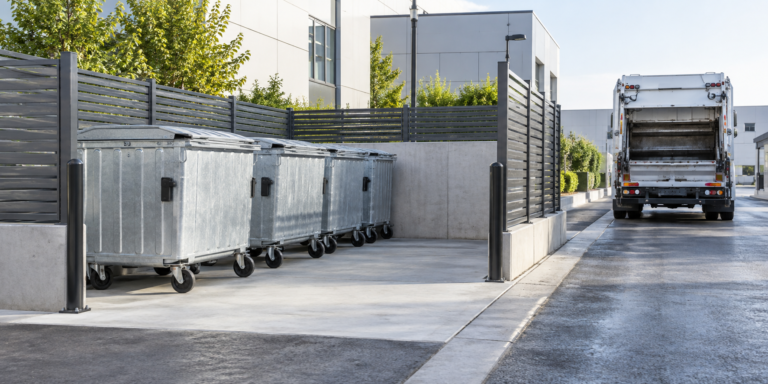

Exhibition halls switch from empty hangar to packed trade show and back within days, generating show-name waste by the skip-load. Most of it is exhibitor packaging..
Exhibition halls switch from empty hangar to packed trade show and back within days, generating show-name waste by the skip-load. Most of it is exhibitor packaging and build-out scrap, with a separate stream of public litter during opening hours.
Before choosing containers, map the streams that exhibition and convention centres actually generate. Each stream has its own container rule: frequency of removal, sealing needs and recycling value.
The zones below cover the standard layout for exhibition and convention centres; adjust the mix to your floor plan, footfall and collection contract.
| Zone | Container type | Key requirement |
|---|---|---|
| Hall floors | bulk containers and skips per hall | stage collections around build and strip-out |
| Stand build areas | 1100L containers for packaging | forklift movement only |
| Catering and food courts | sealed 240–360L food wheels | daily removal during events |
| Public concourses | recycling clusters and litter bins | capacity for visitor peak days |
The hall floor belongs to steel: forklifts, pallet jacks and build crews demand galvanized containers and skips. Concourse bins can be lighter metal or heavy plastic since they face public abuse but not machinery.
Strip-out clears the hall in days: a 10,000 m² show can generate 50–150 tonnes of build waste. Pre-arrange skips and bulk containers for the strip-out window with a collection plan that runs overnight, not after the hall is handed back.
Build waste is mixed by nature, so contract waste at tonnage rates, not by bin. Keep catering and public streams separate and collected daily during events; strip-out streams go straight to sorted recycling where possible.
Two practical questions decide most container orders for exhibition and convention centres: what is already specified in the collection contract, and how the indoor or outdoor layout moves those bins to the loading point. The typical streams are exhibitor packaging and build-out scrap; carpet, board and printed graphics at strip-out; public litter and food waste from catering; stand graphics and promotional material. Each one needs its own container, clear signage and a dedicated collection slot, because mixing streams at the point of use lowers the recycling value of the whole load.
When those streams arrive at different times of day, the layout has to absorb peaks without blocking access routes. The Hall floors zone works best with bulk containers and skips per hall, where stage collections around build and strip-out. The Stand build areas zone works best with 1100L containers for packaging, where forklift movement only. The Catering and food courts zone works best with sealed 240–360L food wheels, where daily removal during events. The Public concourses zone works best with recycling clusters and litter bins, where capacity for visitor peak days.
For exhibition and convention centres, the usual hidden cost is not the container itself but the mismatch between capacity and pick-up frequency: Strip-out clears the hall in days: a 10,000 m² show can generate 50–150 tonnes of build waste. Pre-arrange skips and bulk containers for the strip-out window with a collection plan that runs overnight, not after the hall is handed back. Keep the material decision simple as well.
Our most common finding on site visits is under-specified areas where lighter plastic units take knocks they were never designed for, followed by missing lids on bins that store material overnight. The hall floor belongs to steel: forklifts, pallet jacks and build crews demand galvanized containers and skips. Concourse bins can be lighter metal or heavy plastic since they face public abuse but not machinery. If you are talking to more than one supplier, compare the galvanized coating weight and lid mechanism head to head rather than price per unit alone.
Typically the event organiser contracts hall waste, with exhibitors charged for stand build-out rubbish; clear rules in the show manual.
1100L steel containers and skips for build, with wheeled units allocated per stand footprint.
Reusable stand systems, cardboard recycling at build and scheduled strip-out recycling cut tonnage markedly.
KOVANTO manufactures 2 5m3 Hot Dip Galvanized Waste Container, 1100l Galvanized Waste Container 4, 50l 360l Metal Wheelie Bins, with OEM/ODM options in capacities from 50L walk-in bins to 2.5m³ containers. Send your site plan and collection contract to info@kovantowaste.com for a container layout proposal sized to your streams.