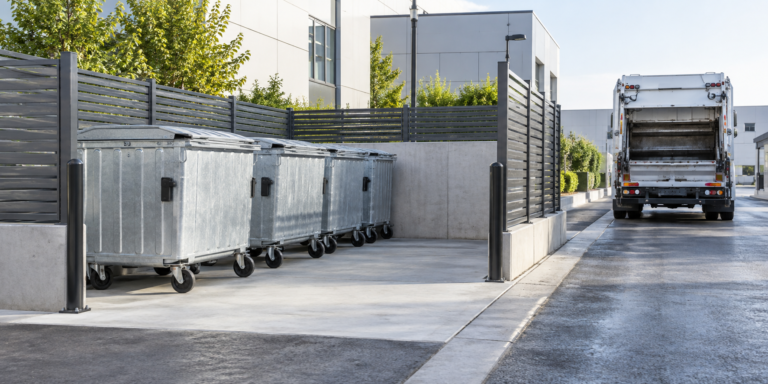

Shopping mall waste plan: high-footfall public recycling stations, food court bins, back-of-house 1100L containers and compaction for cardboard.
Shopping malls are judged by their public spaces, and waste is the fastest way to spoil the impression: an overflowing bin at the food court or a recycling point wrapped in bags turns a premium destination into a maintenance case study. Behind the scenes, retail centres also move very large volumes of packaging that must be compacted, segregated and collected on tight schedules. This guide covers both the front-of-house bins guests see and the back-of-house containers that run the operation.
Visible recycling in a mall is a brand and compliance statement. Multi-stream stations with three to five colour-coded openings, clear pictograms and high capacity work best:
Food courts generate the heaviest and most demanding public waste: greasy trays, half-eaten meals, cups and cutlery. Set up return points with separate compactors or wheels for food scraps and packaging, position staff to keep streams clean during peak hours, and schedule patrol rounds at 20–30 minute intervals during lunch and dinner peaks. Sealed food containers prevent the odour that would otherwise settle over a seating area.
Behind the loading dock, retail packaging multiplies: cardboard from deliveries, shrink wrap, pallets and rejects. The backbone equipment is the baler or compactor, fed via intermediate containers:
| Stream | Container set-up |
|---|---|
| Cardboard | 1100L containers feeding an on-site baler |
| General refuse | 1100L four-wheel containers collected by truck |
| Food court wet waste | Sealed 240–360L wheels for contractors |
| Residual bulk | 2.5m³ galvanized containers for compactor sites |
Enclosed retail environments treat waste rooms as fire-risk areas: containers should be metal, kept away from exits, and cleared nightly. Waste rooms also need controlled access, so lockable container covers and a closed-door policy prevent scavenging and arson. Anchor public bins where they can be tamped down or moved, and specify non-combustible bodies wherever seating and smoking areas meet.
A mall’s waste plan only works if the logistics run quietly:
Malls need two different waste systems run as one: polished, high-capacity public stations that keep guests happy, and a disciplined back-of-house engine of 1100L containers, balers and scheduled truck lifts that keeps the operation profitable and compliant. Choose metal bodies for public and fire-risk locations, size for peak footfall, and keep the two systems on the same schedule book.
KOVANTO’s 1100L galvanized containers, 1100L HDPE bins and 2.5m³ units are used in retail projects across international markets. Contact info@kovantowaste.com for a mall plan tailored to your footfall data.