Fire risk should be considered early when specifying waste containers for industrial sites, public facilities, retail areas and shared residential locations. A practical specification reduces avoidable ignition sources, makes containment choices clear and helps the operator establish a consistent collection routine.
This guide is intended for procurement teams and site managers. It does not replace a project-specific fire-risk assessment or local regulatory advice; instead, it identifies the container details and operating questions worth recording in an RFQ.
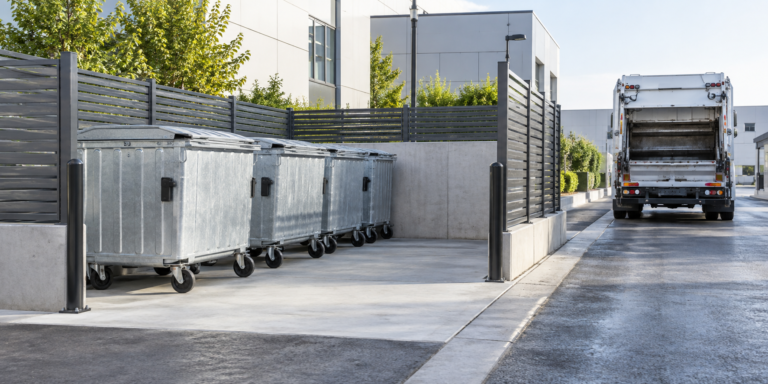
Identify which materials will enter each container and where it will be positioned. Cardboard, packaging film, hot ash, batteries, chemicals and oily residues require different controls. Note whether the container is indoors, beside a building, within a loading yard, in a public area or close to vehicle movements. These facts determine the right capacity, lid arrangement and siting rules.
A robust body, close-fitting lid and controlled access are useful starting points. For outdoor locations, ask how the lid performs in wind and rain and whether the container can be secured in its normal operating position. Consider lockable access where misuse or unauthorised disposal could introduce a fire risk. Drainage details should also match the intended waste stream and cleaning practice.
Compare available waste container configurations alongside the project’s lifting method, site layout and local operating procedure. For related component choices, see our container options.
Hardware alone cannot manage the full risk. The tender should request simple guidance covering container placement, inspection, cleaning, damage reporting and the handling of prohibited materials. State who is responsible for checking lids, locks, labels and surrounding housekeeping before collection.
Ask for material and coating information, lid and lock specifications, available safety options, maintenance advice and packing arrangements. Request drawings that show key dimensions and moving parts. If a project involves large quantities, clarify inspection points before shipment and the availability of replacement components.
For help turning these requirements into a workable project brief, review our waste management solutions or contact KOVANTO. A concise, site-specific specification gives suppliers a fair basis for comparison and supports safer day-to-day waste handling.