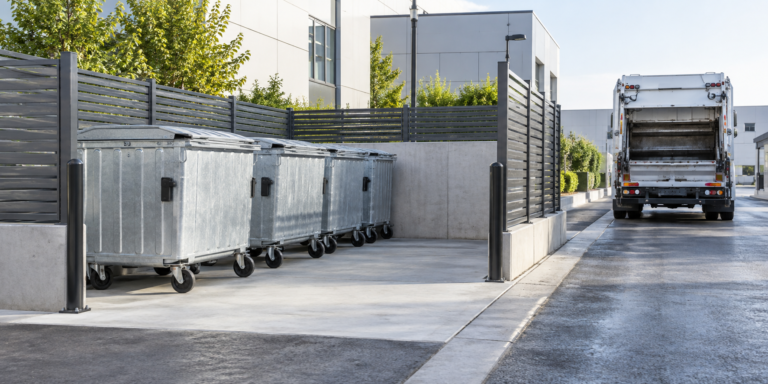

School waste is predictable and strikingly seasonal: paper and food waste through term time, packaging from canteens and vending, and general refuse that swells...
School waste is predictable and strikingly seasonal: paper and food waste through term time, packaging from canteens and vending, and general refuse that swells around sports days and events. Choosing the right bins makes the daily routine quieter, safer and easier to keep clean.
Before choosing containers, map the streams that schools and colleges actually generate. Each stream has its own container rule: frequency of removal, sealing needs and recycling value.
The zones below cover the standard layout for schools and colleges; adjust the mix to your floor plan, footfall and collection contract.
| Zone | Container type | Key requirement |
|---|---|---|
| Classrooms and corridors | 30–60L swing or pedal bins | quiet operation, emptied every day |
| Canteens and kitchens | 120–240L wheelie bins | sealed lids for food waste |
| Playgrounds and yards | 60–100L freestanding metal tins | anchored, weatherproof, rounded edges |
| Back-of-house holding | 660–1100L four-wheel containers | lockable covers, secure compound |
HDPE plastic bodies are the safer default for schools: they shrug off playground knocks, have no sharp edges and rinse clean quickly. Galvanized steel earns its place at high-volume points where fire risk or vandalism is a concern.
A school of roughly 600 students generates 1,200–2,000L of waste a week across all streams. Size the fleet for term peaks and event days, not the quiet weeks, and keep extra 240L wheels for the summer holiday clear-out.
Colour-coded streams with pictograms teach students to sort correctly and keep contamination low. Schedule daily emptying in warm weather, keep food bins sealed, and place washroom bins on a separate route so hygiene staff never overload classroom bins.
Two practical questions decide most container orders for schools and colleges: what is already specified in the collection contract, and how the indoor or outdoor layout moves those bins to the loading point. The typical streams are paper, exercise books and printer waste; food and drink packaging from canteens and vending machines; general refuse from classrooms, offices and washrooms; recycling streams: paper, plastic bottles and cans. Each one needs its own container, clear signage and a dedicated collection slot, because mixing streams at the point of use lowers the recycling value of the whole load.
When those streams arrive at different times of day, the layout has to absorb peaks without blocking access routes. The Classrooms and corridors zone works best with 30–60L swing or pedal bins, where quiet operation, emptied every day. The Canteens and kitchens zone works best with 120–240L wheelie bins, where sealed lids for food waste. The Playgrounds and yards zone works best with 60–100L freestanding metal tins, where anchored, weatherproof, rounded edges. The Back-of-house holding zone works best with 660–1100L four-wheel containers, where lockable covers, secure compound.
For schools and colleges, the usual hidden cost is not the container itself but the mismatch between capacity and pick-up frequency: A school of roughly 600 students generates 1,200–2,000L of waste a week across all streams. Size the fleet for term peaks and event days, not the quiet weeks, and keep extra 240L wheels for the summer holiday clear-out. Keep the material decision simple as well.
Our most common finding on site visits is under-specified areas where lighter plastic units take knocks they were never designed for, followed by missing lids on bins that store material overnight. HDPE plastic bodies are the safer default for schools: they shrug off playground knocks, have no sharp edges and rinse clean quickly. Galvanized steel earns its place at high-volume points where fire risk or vandalism is a concern. If you are talking to more than one supplier, compare the galvanized coating weight and lid mechanism head to head rather than price per unit alone.
A 30–60L swing or pedal bin emptied daily is the standard classroom choice; it is light enough for staff to change and small enough to keep odour under control.
Yes. Many municipalities now require separate food waste collection from institutions, and canteen food waste is the largest single stream in most schools.
Plastic bodies with rounded rims are the safer general default. Use anchored metal tins only where fire risk or heavy vandalism justifies them.
KOVANTO manufactures 120l Plastic Wheelie Bin Waste Container, 240l Hdpe Plastic Wheelie Bin, 1100l Galvanized Waste Container 4, with OEM/ODM options in capacities from 50L walk-in bins to 2.5m³ containers. Send your site plan and collection contract to info@kovantowaste.com for a container layout proposal sized to your streams.