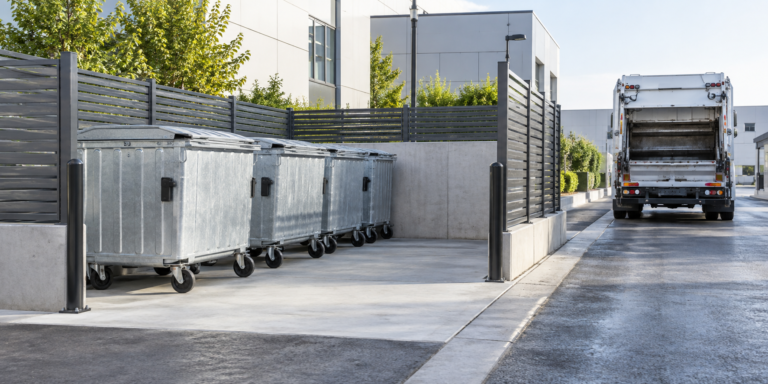

Stations handle intense, fast-moving passenger flows with very short cleaning windows between services. Waste bins on platforms and concourses have to be tough...
Stations handle intense, fast-moving passenger flows with very short cleaning windows between services. Waste bins on platforms and concourses have to be tough, visible and quick to service, while back-of-house containers swallow the commercial waste of retail units and catering.
Before choosing containers, map the streams that railway and metro stations actually generate. Each stream has its own container rule: frequency of removal, sealing needs and recycling value.
The zones below cover the standard layout for railway and metro stations; adjust the mix to your floor plan, footfall and collection contract.
| Zone | Container type | Key requirement |
|---|---|---|
| Platforms | 60–100L robust metal bins | anchored, stands up to weather and vibration |
| Concourse and ticket halls | multi-stream recycling clusters | positioned inside the passenger flow line |
| Retail and F&B units | 120–240L wheelie bins | sealed lids, scheduled night collection |
| Back-of-house yards | 1100L four-wheel containers | lockable covers, bar-lift rims for trucks |
Budgets on stations are tight but vandalism, weather and fire risk demand galvanized steel in exposed locations. HDPE wheels and plastic bins still serve internal retail corridors where weight and noise matter more than strength.
Passenger throughput is the driver, not platform area: a busy metro interchange can fill a 100L platform bin every 20–30 minutes at peak. Set patrol intervals below the observed fill rate and keep spare bins at each platform end.
Cleaning windows are short between services, so bin designs with tool-free liner change and no fiddly clips save minutes per stop. Keep segregation signs lane-oriented so commuters can sort on the move, and lock back-of-house covers against unofficial dumping.
Two practical questions decide most container orders for railway and metro stations: what is already specified in the collection contract, and how the indoor or outdoor layout moves those bins to the loading point. The typical streams are commuter litter from platforms and concourses; takeaway packaging and drinks cups; retail and F&B waste from station units; office and maintenance refuse from station operations. Each one needs its own container, clear signage and a dedicated collection slot, because mixing streams at the point of use lowers the recycling value of the whole load.
When those streams arrive at different times of day, the layout has to absorb peaks without blocking access routes. The Platforms zone works best with 60–100L robust metal bins, where anchored, stands up to weather and vibration. The Concourse and ticket halls zone works best with multi-stream recycling clusters, where positioned inside the passenger flow line. The Retail and F&B units zone works best with 120–240L wheelie bins, where sealed lids, scheduled night collection. The Back-of-house yards zone works best with 1100L four-wheel containers, where lockable covers, bar-lift rims for trucks.
For railway and metro stations, the usual hidden cost is not the container itself but the mismatch between capacity and pick-up frequency: Passenger throughput is the driver, not platform area: a busy metro interchange can fill a 100L platform bin every 20–30 minutes at peak. Set patrol intervals below the observed fill rate and keep spare bins at each platform end. Keep the material decision simple as well.
Our most common finding on site visits is under-specified areas where lighter plastic units take knocks they were never designed for, followed by missing lids on bins that store material overnight. Budgets on stations are tight but vandalism, weather and fire risk demand galvanized steel in exposed locations. HDPE wheels and plastic bins still serve internal retail corridors where weight and noise matter more than strength. If you are talking to more than one supplier, compare the galvanized coating weight and lid mechanism head to head rather than price per unit alone.
An anchored 60–100L metal bin with a fire-safe body and tool-free liner access is the standard solution for exposed platforms.
Multi-stream clusters at concourse level with clear pictograms, supported by segregated wheelie streams behind the scenes.
Vandalism resistance, fire containment and the wear of extreme passenger volumes make galvanized steel the durable choice.
KOVANTO manufactures 50l 360l Metal Wheelie Bins, 1100l Galvanized Waste Container 4, 240l Hdpe Plastic Wheelie Bin, with OEM/ODM options in capacities from 50L walk-in bins to 2.5m³ containers. Send your site plan and collection contract to info@kovantowaste.com for a container layout proposal sized to your streams.