
Choosing restaurant waste containers: food waste wheels, oil separation, recyclables and bin sizing for kitchens that run from lunch rush to closing.
A commercial kitchen is the hardest environment a waste container will ever work in: hot, wet, greasy, fast and unforgiving. Bins are opened dozens of times an hour, filled with hot and heavy scrap, hosed down at closing and rolled to the yard in the dark. This guide explains the container choices that keep a kitchen legal, hygienic and efficient, from the prep counter to the back door.
| Station | Container | Notes |
|---|---|---|
| Prep and wash-up | 60–120L step or swing bins | Quick drop, easily hosed down |
| Line and service point | Colour-coded under-counter bins | Separate food scraps, packaging, glass |
| Back kitchen holding | 120–360L wheelie bins | Sealed lids, strengthened wheels |
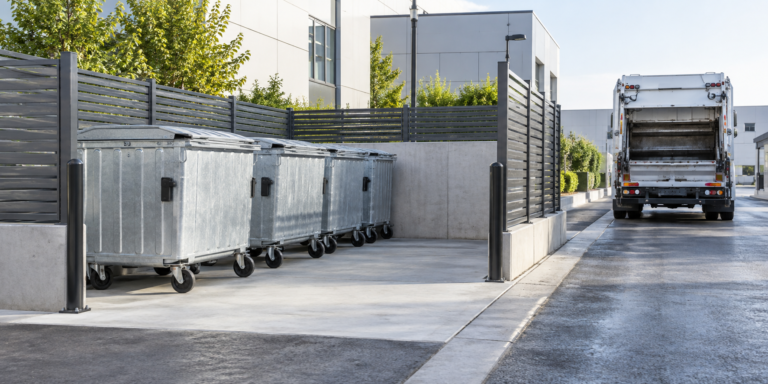
| Yard collection | 660–1100L four-wheel containers | Lockable covers, truck-compatible |
Food waste is about 30–50% of a typical restaurant’s output and it behaves badly: it ferments, smells, attracts pests and is heavy. Specify:
Hot oil and fats belong in dedicated containers collected by licensed processing companies, arranged through your waste contractor. Grease traps and interceptors protect the drains; used cooking oil is valuable feedstock, so it is collected free or paid in many markets. Mixing fat with general waste invalidates contracts, harms recycling and causes drain blockages, so keep oil handling fully separate from solid waste.
Size by daily bag volume, not by seat count alone. Kitchen waste from a busy lunch-to-dinner operation commonly runs 100–300L of food waste and 200–600L of packaging per day. Convert that into collection frequency: a 240L food waste bin collected twice daily holds far more effectively than a 360L bin emptied once, because food waste cannot wait 24 hours in warm weather.
Kitchen containers are washed with degreasers and hot water at the end of every shift. HDPE tolerates standard commercial kitchen washing, but aggressive solvents and steam cleaning beyond the polymer’s limits fade and craze it. Rinse bins before hot wash, keep detergent manufacturers’ dilution instructions, and replace worn liners and wheels promptly, since a cracked wheel is a slip-and-fall risk.
Restaurant waste moves fast and wet, so the container plan must be simple enough for a busy line cook and robust enough for a nightly hosepipe wash-down: colour-coded small bins at stations, sealed heavy-duty wheels for food waste, and lockable large containers for the yard. Separate oil and never let food waste wait more than a day.
See the 240L HDPE wheelie bin, the 1100L galvanized container and 120L HDPE bins from KOVANTO, or contact info@kovantowaste.com to size a full kitchen set.