

Choosing the right metal waste containers requires more than comparing price and capacity. Buyers must consider the waste type, operating environment, collection frequency, available space and compatibility with waste collection equipment.
A container used outside a factory may require a different steel thickness and corrosion-protection system from one installed in a residential community. Municipal and government projects may also define specific dimensions, lifting interfaces, wheel configurations and marking requirements.
The first step is to identify where the container will be used.
Common applications include:
Outdoor containers usually require greater corrosion resistance and weather protection. Industrial containers may need reinforced panels, heavier steel and stronger lifting components.
Common material options include:
Hot-dip galvanized steel is commonly considered for outdoor and municipal projects. Powder-coated galvanized sheet provides additional colour and branding flexibility. Stainless steel is often selected for decorative, hygienic or premium public environments.
Typical capacities include:
Capacity must be evaluated together with dimensions, waste density and collection frequency. A large container is not automatically suitable for heavy waste.
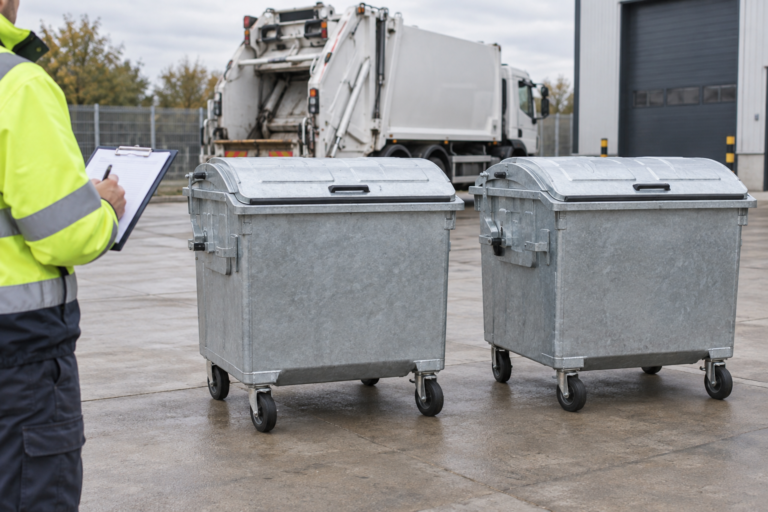
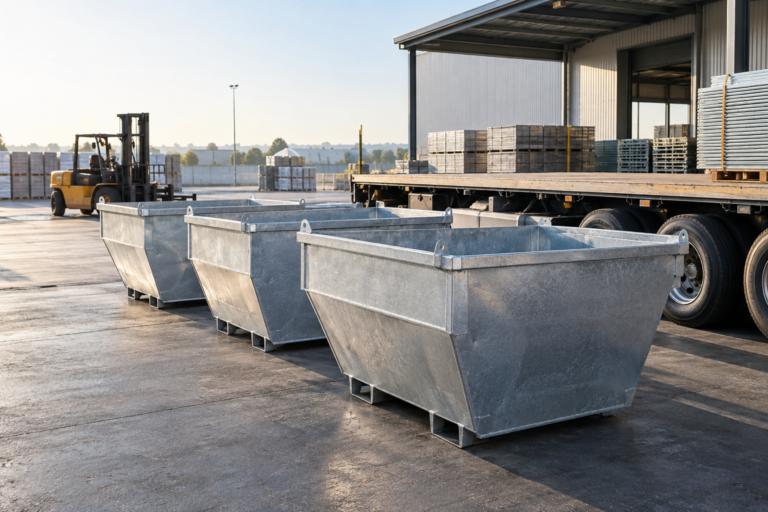
Available configurations may include:
The final configuration should match user safety, collection frequency and operating conditions.
Before placing an order, confirm the required lifting system. Common options include comb lifting, trunnion lifting, side lifting, front loading and hook-lift systems.
Send the supplier the truck model, lifting dimensions, reference drawings or existing container measurements whenever possible.
The most suitable metal waste container is one designed around the complete operating system—not only capacity.
A reliable specification should include:




Hi, this is a comment.
To get started with moderating, editing, and deleting comments, please visit the Comments screen in the dashboard.
Commenter avatars come from Gravatar.